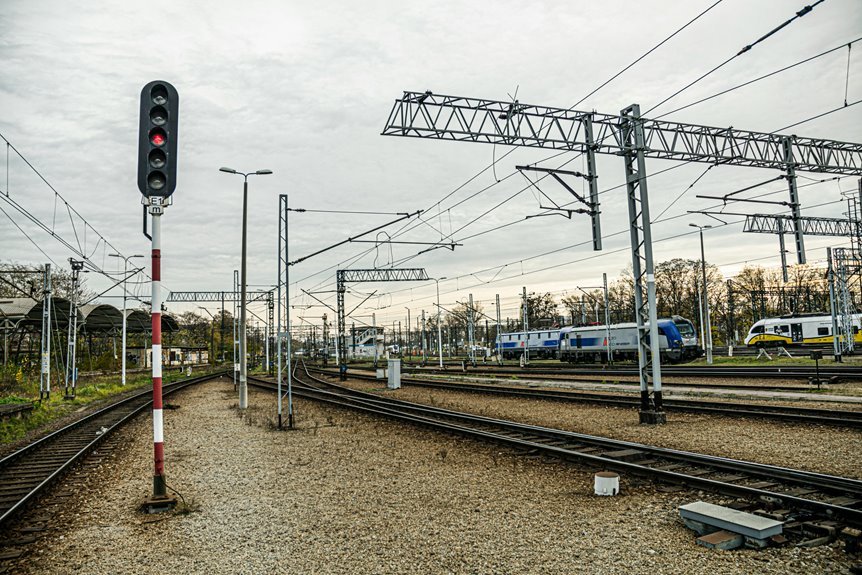
The Lunar Signal Hub 0120829707 Vertex Routing Track acts as a dedicated data pathway within a lunar mesh. It coordinates signal flow among ground stations, orbiting relays, and surface nodes with tight timing and autonomous calibration. Stable latency, predictable handoffs, and interference avoidance are central design goals. The approach emphasizes resilience under lunar conditions and evolving topology, but practical limits and deployment constraints remain. Consider what these tradeoffs imply for future field configurations and system validation.
What Is Lunar Signal Hub 0120829707 Vertex Routing Track?
Lunar Signal Hub 0120829707 Vertex Routing Track refers to a specific component within a lunar communication framework, designed to manage and optimize signal routing between nodes.
It functions as a dedicated pathway that coordinates data flow, maintains synchronization, and adapts to network topology changes.
This structure supports lunar signal integrity, hub vertex coordination, routing track efficiency, and robust lunar networks.
How Vertex Routing Stabilizes Lunar Networks in Practice
Vertex routing provides a practical framework for stabilizing lunar networks by enforcing predictable data paths and tight synchronization among hub nodes. In practice, this approach minimizes jitter and preserves timing guarantees, enabling robust mesh operation.
The method supports latency optimization through measured routing intervals and proactive congestion awareness, while handoff strategies ensure seamless, continuous reachability as topology evolves, without compromising global coherence.
Key Design Decisions: Latency, Handoffs, and Interference Avoidance
Key design decisions in this topic focus on how latency targets are established, how handoffs preserve continuity during topology changes, and how interference is mitigated to safeguard link quality. The discussion emphasizes latency design principles, balancing prompt signaling with stability, while preserving seamless routing paths.
Interference avoidance strategies optimize spectrum use, minimize cross-channel disruption, and sustain reliable data delivery across evolving lunar network topologies.
Real-World Deployment Scenarios on the Moon
Real-world deployment on the Moon presents unique constraints and opportunities for lunar network operations. Field conditions demand robust links, autonomous calibration, and fault-tolerant routing. Deployment scenarios consider lunar topology, solar cyclicity, and transient radiation. Systems emphasize signal resilience, modularity, and maintainable interfaces. Ground stations, orbiting relays, and surface nodes coordinate with disciplined timing. Operational assurance hinges on adaptive topology, resource budgeting, and rigorous remote diagnostics.
Conclusion
The Lunar Signal Hub 0120829707 Vertex Routing Track embodies disciplined timing, autonomous calibration, and robust topology adaptation for lunar mesh networks. By prioritizing latency targets, seamless handoffs, and interference avoidance, it sustains stable, low-jitter communications among ground stations, orbiting relays, and surface nodes. In practice, how does a single, precisely routed data stream keep the entire network in synchronized orbit, much like a single beacon guiding an orchestra through a moonlit cadence?